


WeWork faced steep operating expenses and borrowing costs coupled with lackluster occupancy that left it struggling to stay afloat.
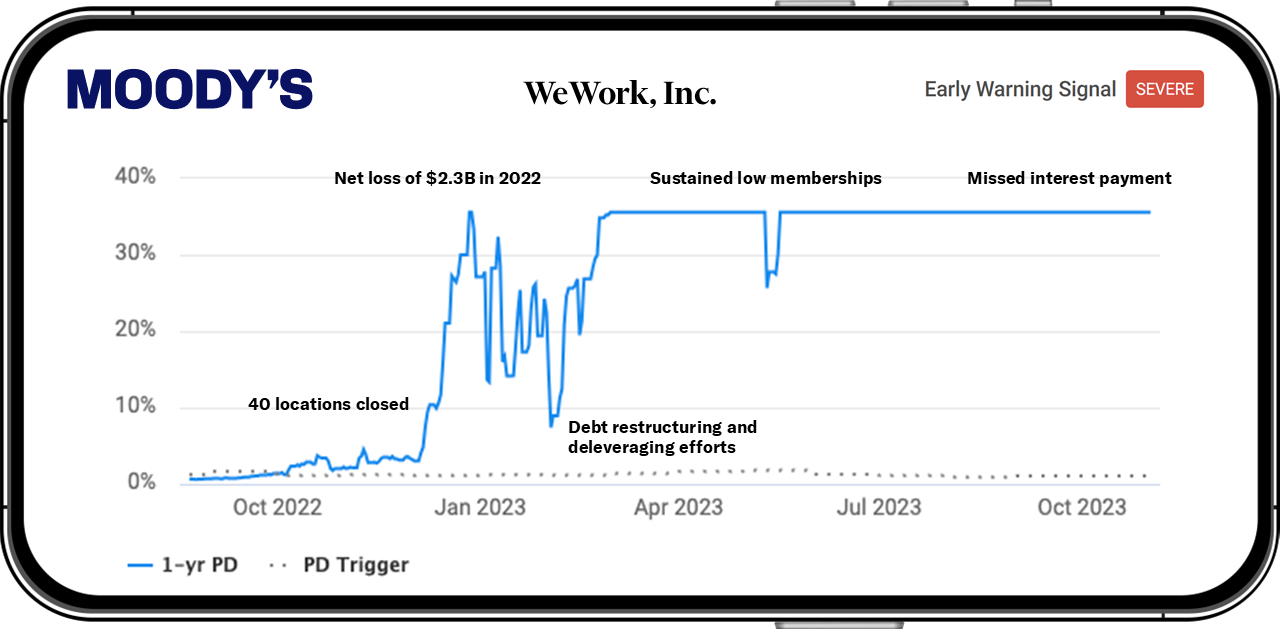
Founded in 2010, WeWork, Inc. is a leading provider of flexible workspaces with 777 locations across 39 countries. The Moody’s early warning system has persistently flagged the firm as a watchlist candidate with elevated credit risk from October 2022 onward. Once valued at $47 billion, WeWork attracted high-profile clients, such as IBM and Microsoft.
While WeWork initially benefitted from the pandemic-driven shift to flexible work outside traditional offices, it suffered sustained losses from considerable operating expenses and borrowing costs that have plagued the commercial real estate sector. WeWork’s losses were aggravated by increased competition in the supply of flexible workspaces, mass layoffs across the tech sector, and macroeconomic volatility, all of which drove high membership churn and softened demand, with only a 72% physical occupancy rate at the end of second quarter of 2023.
Largely propped up by its majority shareholder, Softbank, WeWork amassed a net long-term debt of $2.9 billion and more than $13 billion in long-term lease obligations by mid-2023. Despite efforts to bolster liquidity, renegotiate lease agreements, and deleverage its capital structure, WeWork ultimately missed a substantial interest payment in October 2023 and is expected to file for bankruptcy.
LEARN MORE
Moody's EDF-X solution
Moody’s flagship solution for accelerated risk insights and early warning signals, leverages our time-tested credit models to assess the financial resilience of rated and unrated, public and private companies globally – with greater speed and accuracy.